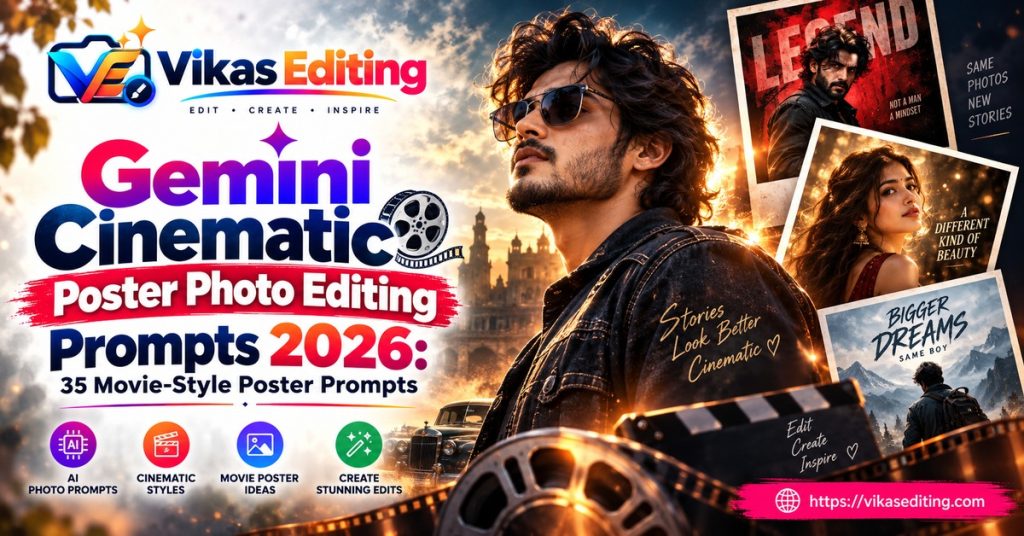
If you are searching for Gemini cinematic poster photo editing prompts, this guide gives you a complete copy-paste collection instead of short generic commands. It is written for creators who want uploaded portraits transformed into dramatic movie-style poster compositions while keeping the subject recognizable. Every prompt below tells the editor what to change, what to preserve, how to match lighting and perspective, and what common AI errors to avoid.
The page is also built around related search intent such as movie poster, cinematic portrait, film key art, dramatic poster lighting, action poster, romance poster, thriller poster and social media poster. Each prompt stays between 100 and 150 words so it is detailed enough for controlled image editing without becoming repetitive. Upload a clear source photo, choose the closest prompt and customize only the creative details that do not match your image.
35 Gemini Cinematic Poster Photo Editing Prompts to Copy and Paste
Choose the prompt closest to your image, copy it and paste it with the uploaded source photo. Every prompt below is between 100 and 150 words and is written to keep the edit controlled, realistic and easy to customize.
1. Action Movie Poster
Use the uploaded photo as the source image. Create a action movie poster. Keep the subject recognizable and build cinematic key art through lighting, framing, background scale and negative space rather than changing the person into a different actor. Preserve the subject’s real face, body proportions, clothing identity and believable anatomy while changing lighting, composition and background. Use soft window light with gentle fill, a 35mm environmental perspective, and balanced commercial color. Match perspective, lighting, shadows and depth so every edited element belongs in the same photograph. Keep realistic visible texture, and avoid face drift, waxy skin, extra fingers, warped geometry and fake text. Do not add a watermark or decorative text unless the concept specifically requires text. Output in 1:1 square. Check faces, hands, edges, text, reflections and important objects before finalizing. If the creative transformation causes identity, product or scene drift, reduce the transformation and prioritize preservation.
2. Romantic Movie Poster
Use the uploaded photo as the source image. Create a romantic movie poster. Keep the subject recognizable and build cinematic key art through lighting, framing, background scale and negative space rather than changing the person into a different actor. Preserve the subject’s real face, body proportions, clothing identity and believable anatomy while changing lighting, composition and background. Use warm golden-hour light, a 70mm editorial perspective, and rich but realistic color. Match perspective, lighting, shadows and depth so every edited element belongs in the same photograph. Keep realistic visible texture, and avoid duplicate objects, strange reflections, halos, oversharpening and random logos. Do not add a watermark or decorative text unless the concept specifically requires text. Output in 9:16 vertical. Check faces, hands, edges, text, reflections and important objects before finalizing. If the creative transformation causes identity, product or scene drift, reduce the transformation and prioritize preservation.
3. Thriller Movie Poster
Use the uploaded photo as the source image. Create a thriller movie poster. Keep the subject recognizable and build cinematic key art through lighting, framing, background scale and negative space rather than changing the person into a different actor. Preserve the subject’s real face, body proportions, clothing identity and believable anatomy while changing lighting, composition and background. Use large diffused studio light, a realistic modern phone-camera perspective, and neutral true-to-life color. Match perspective, lighting, shadows and depth so every edited element belongs in the same photograph. Keep realistic visible texture, and avoid broken anatomy, melted edges, unrealistic shadows, plastic skin and unreadable text. Do not add a watermark or decorative text unless the concept specifically requires text. Output in 3:4 portrait. Check faces, hands, edges, text, reflections and important objects before finalizing. If the creative transformation causes identity, product or scene drift, reduce the transformation and prioritize preservation.
4. Mystery Movie Poster
Use the uploaded photo as the source image. Create a mystery movie poster. Keep the subject recognizable and build cinematic key art through lighting, framing, background scale and negative space rather than changing the person into a different actor. Preserve the subject’s real face, body proportions, clothing identity and believable anatomy while changing lighting, composition and background. Use cool blue-hour ambience with one warm practical source, a 50mm full-frame look, and warm cinematic color. Match perspective, lighting and shadows so the edit feels like one photograph. Keep realistic visible texture, and avoid unnecessary scene changes, distorted hands, false texture, clipped highlights and crushed shadows. Do not add a watermark or decorative text unless the concept specifically requires text. Output in 16:9 landscape. Check faces, hands, edges, text, reflections and important objects before finalizing. If the creative transformation causes identity, product or scene drift, reduce the transformation and prioritize preservation.
5. Sports Movie Poster
Use the uploaded photo as the source image. Create a sports movie poster. Keep the subject recognizable and build cinematic key art through lighting, framing, background scale and negative space rather than changing the person into a different actor. Preserve the subject’s real face, body proportions, clothing identity and believable anatomy while changing lighting, composition and background. Use soft overcast daylight, a 50mm eye-level portrait perspective, and clean editorial color. Match perspective, lighting, shadows and depth so every edited element belongs in the same photograph. Keep realistic visible texture, and avoid floating accessories, altered identity, inconsistent light direction, fake bokeh and watermark-like text. Do not add a watermark or decorative text unless the concept specifically requires text. Output in the original aspect ratio. Check faces, hands, edges, text, reflections and important objects before finalizing. If the creative transformation causes identity, product or scene drift, reduce the transformation and prioritize preservation.
6. Travel Adventure Poster
Use the uploaded photo as the source image. Create a travel adventure poster. Keep the subject recognizable and build cinematic key art through lighting, framing, background scale and negative space rather than changing the person into a different actor. Preserve the subject’s real face, body proportions, clothing identity and believable anatomy while changing lighting, composition and background. Use controlled cinematic side light, a 85mm professional portrait perspective, and soft film-inspired color. Match perspective, lighting, shadows and depth so every edited element belongs in the same photograph. Keep realistic visible texture, and avoid face drift, waxy skin, extra fingers, warped geometry and fake text. Do not add a watermark or decorative text unless the concept specifically requires text. Output in 4:5 vertical. Check faces, hands, edges, text, reflections and important objects before finalizing. If the creative transformation causes identity, product or scene drift, reduce the transformation and prioritize preservation.
7. Street Racing Poster
Use the uploaded photo as the source image. Create a street racing poster. Keep the subject recognizable and build cinematic key art through lighting, framing, background scale and negative space rather than changing the person into a different actor. Preserve the subject’s real face, body proportions, clothing identity and believable anatomy while changing lighting, composition and background. Use soft window light with gentle fill, a 35mm environmental perspective, and balanced commercial color. Match perspective, lighting, shadows and depth so every edited element belongs in the same photograph. Keep realistic visible texture, and avoid duplicate objects, strange reflections, halos, oversharpening and random logos. Do not add a watermark or decorative text unless the concept specifically requires text. Output in 1:1 square. Check faces, hands, edges, text, reflections and important objects before finalizing. If the creative transformation causes identity, product or scene drift, reduce the transformation and prioritize preservation.
8. Motorcycle Action Poster
Use the uploaded photo as the source image. Create a motorcycle action poster. Keep the subject recognizable and build cinematic key art through lighting, framing, background scale and negative space rather than changing the person into a different actor. Preserve the subject’s real face, body proportions, clothing identity and believable anatomy while changing lighting, composition and background. Use warm golden-hour light, a 70mm editorial perspective, and rich but realistic color. Match perspective, lighting, shadows and depth so every edited element belongs in the same photograph. Keep realistic visible texture, and avoid broken anatomy, melted edges, unrealistic shadows, plastic skin and unreadable text. Do not add a watermark or decorative text unless the concept specifically requires text. Output in 9:16 vertical. Check faces, hands, edges, text, reflections and important objects before finalizing. If the creative transformation causes identity, product or scene drift, reduce the transformation and prioritize preservation.
9. Luxury Car Poster
Use the uploaded photo as the source image. Create a luxury car poster. Keep the subject recognizable and build cinematic key art through lighting, framing, background scale and negative space rather than changing the person into a different actor. Preserve the subject’s real face, body proportions, clothing identity and believable anatomy while changing lighting, composition and background. Use large diffused studio light, a realistic modern phone-camera perspective, and neutral true-to-life color. Match perspective, lighting, shadows and depth so every edited element belongs in the same photograph. Keep realistic visible texture, and avoid unnecessary scene changes, distorted hands, false texture, clipped highlights and crushed shadows. Do not add a watermark or decorative text unless the concept specifically requires text. Output in 3:4 portrait. Check faces, hands, edges, text, reflections and important objects before finalizing. If the creative transformation causes identity, product or scene drift, reduce the transformation and prioritize preservation.
10. Fashion Film Poster
Use the uploaded photo as the source image. Create a fashion film poster. Keep the subject recognizable and build cinematic key art through lighting, framing, background scale and negative space rather than changing the person into a different actor. Preserve the subject’s real face, body proportions, clothing identity and believable anatomy while changing lighting, composition and background. Use cool blue-hour ambience with one warm practical source, a 50mm full-frame look, and warm cinematic color. Match perspective, lighting and shadows so the edit feels like one photograph. Keep realistic visible texture, and avoid floating accessories, altered identity, inconsistent light direction, fake bokeh and watermark-like text. Do not add a watermark or decorative text unless the concept specifically requires text. Output in 16:9 landscape. Check faces, hands, edges, text, reflections and important objects before finalizing. If the creative transformation causes identity, product or scene drift, reduce the transformation and prioritize preservation.
11. Wedding Film Poster
Use the uploaded photo as the source image. Create a wedding film poster. Keep the subject recognizable and build cinematic key art through lighting, framing, background scale and negative space rather than changing the person into a different actor. Preserve the subject’s real face, body proportions, clothing identity and believable anatomy while changing lighting, composition and background. Use soft overcast daylight, a 50mm eye-level portrait perspective, and clean editorial color. Match perspective, lighting, shadows and depth so every edited element belongs in the same photograph. Keep realistic visible texture, and avoid face drift, waxy skin, extra fingers, warped geometry and fake text. Do not add a watermark or decorative text unless the concept specifically requires text. Output in the original aspect ratio. Check faces, hands, edges, text, reflections and important objects before finalizing. If the creative transformation causes identity, product or scene drift, reduce the transformation and prioritize preservation.
12. Couple Romance Poster
Use the uploaded photo as the source image. Create a couple romance poster. Keep the subject recognizable and build cinematic key art through lighting, framing, background scale and negative space rather than changing the person into a different actor. Preserve the subject’s real face, body proportions, clothing identity and believable anatomy while changing lighting, composition and background. Use controlled cinematic side light, a 85mm professional portrait perspective, and soft film-inspired color. Match perspective, lighting, shadows and depth so every edited element belongs in the same photograph. Keep realistic visible texture, and avoid duplicate objects, strange reflections, halos, oversharpening and random logos. Do not add a watermark or decorative text unless the concept specifically requires text. Output in 4:5 vertical. Check faces, hands, edges, text, reflections and important objects before finalizing. If the creative transformation causes identity, product or scene drift, reduce the transformation and prioritize preservation.
13. Hero Character Poster
Use the uploaded photo as the source image. Create a hero character poster. Keep the subject recognizable and build cinematic key art through lighting, framing, background scale and negative space rather than changing the person into a different actor. Preserve the subject’s real face, body proportions, clothing identity and believable anatomy while changing lighting, composition and background. Use soft window light with gentle fill, a 35mm environmental perspective, and balanced commercial color. Match perspective, lighting, shadows and depth so every edited element belongs in the same photograph. Keep realistic visible texture, and avoid broken anatomy, melted edges, unrealistic shadows, plastic skin and unreadable text. Do not add a watermark or decorative text unless the concept specifically requires text. Output in 1:1 square. Check faces, hands, edges, text, reflections and important objects before finalizing. If the creative transformation causes identity, product or scene drift, reduce the transformation and prioritize preservation.
14. Heroine Character Poster
Use the uploaded photo as the source image. Create a heroine character poster. Keep the subject recognizable and build cinematic key art through lighting, framing, background scale and negative space rather than changing the person into a different actor. Preserve the subject’s real face, body proportions, clothing identity and believable anatomy while changing lighting, composition and background. Use warm golden-hour light, a 70mm editorial perspective, and rich but realistic color. Match perspective, lighting, shadows and depth so every edited element belongs in the same photograph. Keep realistic visible texture, and avoid unnecessary scene changes, distorted hands, false texture, clipped highlights and crushed shadows. Do not add a watermark or decorative text unless the concept specifically requires text. Output in 9:16 vertical. Check faces, hands, edges, text, reflections and important objects before finalizing. If the creative transformation causes identity, product or scene drift, reduce the transformation and prioritize preservation.
15. Black-and-White Film Poster
Use the uploaded photo as the source image. Create a black-and-white film poster. Keep the subject recognizable and build cinematic key art through lighting, framing, background scale and negative space rather than changing the person into a different actor. Preserve the subject’s real face, body proportions, clothing identity and believable anatomy while changing lighting, composition and background. Use large diffused studio light, a realistic modern phone-camera perspective, and neutral true-to-life color. Match perspective, lighting, shadows and depth so every edited element belongs in the same photograph. Keep realistic visible texture, and avoid floating accessories, altered identity, inconsistent light direction, fake bokeh and watermark-like text. Do not add a watermark or decorative text unless the concept specifically requires text. Output in 3:4 portrait. Check faces, hands, edges, text, reflections and important objects before finalizing. If the creative transformation causes identity, product or scene drift, reduce the transformation and prioritize preservation.
16. Neon City Poster
Use the uploaded photo as the source image. Create a neon city poster. Keep the subject recognizable and build cinematic key art through lighting, framing, background scale and negative space rather than changing the person into a different actor. Preserve the subject’s real face, body proportions, clothing identity and believable anatomy while changing lighting, composition and background. Use cool blue-hour ambience with one warm practical source, a 50mm full-frame look, and warm cinematic color. Match perspective, lighting and shadows so the edit feels like one photograph. Keep realistic visible texture, and avoid face drift, waxy skin, extra fingers, warped geometry and fake text. Do not add a watermark or decorative text unless the concept specifically requires text. Output in 16:9 landscape. Check faces, hands, edges, text, reflections and important objects before finalizing. If the creative transformation causes identity, product or scene drift, reduce the transformation and prioritize preservation.
17. Desert Adventure Poster
Use the uploaded photo as the source image. Create a desert adventure poster. Keep the subject recognizable and build cinematic key art through lighting, framing, background scale and negative space rather than changing the person into a different actor. Preserve the subject’s real face, body proportions, clothing identity and believable anatomy while changing lighting, composition and background. Use soft overcast daylight, a 50mm eye-level portrait perspective, and clean editorial color. Match perspective, lighting, shadows and depth so every edited element belongs in the same photograph. Keep realistic visible texture, and avoid duplicate objects, strange reflections, halos, oversharpening and random logos. Do not add a watermark or decorative text unless the concept specifically requires text. Output in the original aspect ratio. Check faces, hands, edges, text, reflections and important objects before finalizing. If the creative transformation causes identity, product or scene drift, reduce the transformation and prioritize preservation.
18. Mountain Survival Poster
Use the uploaded photo as the source image. Create a mountain survival poster. Keep the subject recognizable and build cinematic key art through lighting, framing, background scale and negative space rather than changing the person into a different actor. Preserve the subject’s real face, body proportions, clothing identity and believable anatomy while changing lighting, composition and background. Use controlled cinematic side light, a 85mm professional portrait perspective, and soft film-inspired color. Match perspective, lighting, shadows and depth so every edited element belongs in the same photograph. Keep realistic visible texture, and avoid broken anatomy, melted edges, unrealistic shadows, plastic skin and unreadable text. Do not add a watermark or decorative text unless the concept specifically requires text. Output in 4:5 vertical. Check faces, hands, edges, text, reflections and important objects before finalizing. If the creative transformation causes identity, product or scene drift, reduce the transformation and prioritize preservation.
19. Rainy Thriller Poster
Use the uploaded photo as the source image. Create a rainy thriller poster. Keep the subject recognizable and build cinematic key art through lighting, framing, background scale and negative space rather than changing the person into a different actor. Preserve the subject’s real face, body proportions, clothing identity and believable anatomy while changing lighting, composition and background. Use soft window light with gentle fill, a 35mm environmental perspective, and balanced commercial color. Match perspective, lighting and shadows so the edit feels like one photograph. Keep realistic visible texture, and avoid unnecessary scene changes, distorted hands, false texture, clipped highlights and crushed shadows. Do not add a watermark or decorative text unless the concept specifically requires text. Output in 1:1 square. Check faces, hands, edges, text, reflections and important objects before finalizing. If the creative transformation causes identity, product or scene drift, reduce the transformation and prioritize preservation.
20. Golden Hour Drama Poster
Use the uploaded photo as the source image. Create a golden hour drama poster. Keep the subject recognizable and build cinematic key art through lighting, framing, background scale and negative space rather than changing the person into a different actor. Preserve the subject’s real face, body proportions, clothing identity and believable anatomy while changing lighting, composition and background. Use warm golden-hour light, a 70mm editorial perspective, and rich but realistic color. Match perspective, lighting, shadows and depth so every edited element belongs in the same photograph. Keep realistic visible texture, and avoid floating accessories, altered identity, inconsistent light direction, fake bokeh and watermark-like text. Do not add a watermark or decorative text unless the concept specifically requires text. Output in 9:16 vertical. Check faces, hands, edges, text, reflections and important objects before finalizing. If the creative transformation causes identity, product or scene drift, reduce the transformation and prioritize preservation.
21. Blue-Hour Poster
Use the uploaded photo as the source image. Create a blue-hour poster. Keep the subject recognizable and build cinematic key art through lighting, framing, background scale and negative space rather than changing the person into a different actor. Preserve the subject’s real face, body proportions, clothing identity and believable anatomy while changing lighting, composition and background. Use large diffused studio light, a realistic modern phone-camera perspective, and neutral true-to-life color. Match perspective, lighting, shadows and depth so every edited element belongs in the same photograph. Keep realistic visible texture, and avoid face drift, waxy skin, extra fingers, warped geometry and fake text. Do not add a watermark or decorative text unless the concept specifically requires text. Output in 3:4 portrait. Check faces, hands, edges, text, reflections and important objects before finalizing. If the creative transformation causes identity, product or scene drift, reduce the transformation and prioritize preservation.
22. Retro Bollywood Poster
Use the uploaded photo as the source image. Create a retro bollywood poster. Keep the subject recognizable and build cinematic key art through lighting, framing, background scale and negative space rather than changing the person into a different actor. Preserve the subject’s real face, body proportions, clothing identity and believable anatomy while changing lighting, composition and background. Use cool blue-hour ambience with one warm practical source, a 50mm full-frame look, and warm cinematic color. Match perspective, lighting, shadows and depth so every edited element belongs in the same photograph. Keep realistic visible texture, and avoid duplicate objects, strange reflections, halos, oversharpening and random logos. Do not add a watermark or decorative text unless the concept specifically requires text. Output in 16:9 landscape. Check faces, hands, edges, text, reflections and important objects before finalizing. If the creative transformation causes identity, product or scene drift, reduce the transformation and prioritize preservation.
23. 90s Film Poster
Use the uploaded photo as the source image. Create a 90s film poster. Keep the subject recognizable and build cinematic key art through lighting, framing, background scale and negative space rather than changing the person into a different actor. Preserve the subject’s real face, body proportions, clothing identity and believable anatomy while changing lighting, composition and background. Use soft overcast daylight, a 50mm eye-level portrait perspective, and clean editorial color. Match perspective, lighting, shadows and depth so every edited element belongs in the same photograph. Keep realistic visible texture, and avoid broken anatomy, melted edges, unrealistic shadows, plastic skin and unreadable text. Do not add a watermark or decorative text unless the concept specifically requires text. Output in the original aspect ratio. Check faces, hands, edges, text, reflections and important objects before finalizing. If the creative transformation causes identity, product or scene drift, reduce the transformation and prioritize preservation.
24. Minimal Art-House Poster
Use the uploaded photo as the source image. Create a minimal art-house poster. Keep the subject recognizable and build cinematic key art through lighting, framing, background scale and negative space rather than changing the person into a different actor. Preserve the subject’s real face, body proportions, clothing identity and believable anatomy while changing lighting, composition and background. Use controlled cinematic side light, a 85mm professional portrait perspective, and soft film-inspired color. Match perspective, lighting, shadows and depth so every edited element belongs in the same photograph. Keep realistic visible texture, and avoid unnecessary scene changes, distorted hands, false texture, clipped highlights and crushed shadows. Do not add a watermark or decorative text unless the concept specifically requires text. Output in 4:5 vertical. Check faces, hands, edges, text, reflections and important objects before finalizing. If the creative transformation causes identity, product or scene drift, reduce the transformation and prioritize preservation.
25. Dark Crime Poster
Use the uploaded photo as the source image. Create a dark crime poster. Keep the subject recognizable and build cinematic key art through lighting, framing, background scale and negative space rather than changing the person into a different actor. Preserve the subject’s real face, body proportions, clothing identity and believable anatomy while changing lighting, composition and background. Use soft window light with gentle fill, a 35mm environmental perspective, and balanced commercial color. Match perspective, lighting and shadows so the edit feels like one photograph. Keep realistic visible texture, and avoid floating accessories, altered identity, inconsistent light direction, fake bokeh and watermark-like text. Do not add a watermark or decorative text unless the concept specifically requires text. Output in 1:1 square. Check faces, hands, edges, text, reflections and important objects before finalizing. If the creative transformation causes identity, product or scene drift, reduce the transformation and prioritize preservation.
26. Corporate Documentary Poster
Use the uploaded photo as the source image. Create a corporate documentary poster. Keep the subject recognizable and build cinematic key art through lighting, framing, background scale and negative space rather than changing the person into a different actor. Preserve the subject’s real face, body proportions, clothing identity and believable anatomy while changing lighting, composition and background. Use warm golden-hour light, a 70mm editorial perspective, and rich but realistic color. Match perspective, lighting, shadows and depth so every edited element belongs in the same photograph. Keep realistic visible texture, and avoid face drift, waxy skin, extra fingers, warped geometry and fake text. Do not add a watermark or decorative text unless the concept specifically requires text. Output in 9:16 vertical. Check faces, hands, edges, text, reflections and important objects before finalizing. If the creative transformation causes identity, product or scene drift, reduce the transformation and prioritize preservation.
27. Music Video Poster
Use the uploaded photo as the source image. Create a music video poster. Keep the subject recognizable and build cinematic key art through lighting, framing, background scale and negative space rather than changing the person into a different actor. Preserve the subject’s real face, body proportions, clothing identity and believable anatomy while changing lighting, composition and background. Use large diffused studio light, a realistic modern phone-camera perspective, and neutral true-to-life color. Match perspective, lighting, shadows and depth so every edited element belongs in the same photograph. Keep realistic visible texture, and avoid duplicate objects, strange reflections, halos, oversharpening and random logos. Do not add a watermark or decorative text unless the concept specifically requires text. Output in 3:4 portrait. Check faces, hands, edges, text, reflections and important objects before finalizing. If the creative transformation causes identity, product or scene drift, reduce the transformation and prioritize preservation.
28. Dance Film Poster
Use the uploaded photo as the source image. Create a dance film poster. Keep the subject recognizable and build cinematic key art through lighting, framing, background scale and negative space rather than changing the person into a different actor. Preserve the subject’s real face, body proportions, clothing identity and believable anatomy while changing lighting, composition and background. Use cool blue-hour ambience with one warm practical source, a 50mm full-frame look, and warm cinematic color. Match perspective, lighting and shadows so the edit feels like one photograph. Keep realistic visible texture, and avoid broken anatomy, melted edges, unrealistic shadows, plastic skin and unreadable text. Do not add a watermark or decorative text unless the concept specifically requires text. Output in 16:9 landscape. Check faces, hands, edges, text, reflections and important objects before finalizing. If the creative transformation causes identity, product or scene drift, reduce the transformation and prioritize preservation.
29. Festival Film Poster
Use the uploaded photo as the source image. Create a festival film poster. Keep the subject recognizable and build cinematic key art through lighting, framing, background scale and negative space rather than changing the person into a different actor. Preserve the subject’s real face, body proportions, clothing identity and believable anatomy while changing lighting, composition and background. Use soft overcast daylight, a 50mm eye-level portrait perspective, and clean editorial color. Match perspective, lighting, shadows and depth so every edited element belongs in the same photograph. Keep realistic visible texture, and avoid unnecessary scene changes, distorted hands, false texture, clipped highlights and crushed shadows. Do not add a watermark or decorative text unless the concept specifically requires text. Output in the original aspect ratio. Check faces, hands, edges, text, reflections and important objects before finalizing. If the creative transformation causes identity, product or scene drift, reduce the transformation and prioritize preservation.
30. Family Drama Poster
Use the uploaded photo as the source image. Create a family drama poster. Keep the subject recognizable and build cinematic key art through lighting, framing, background scale and negative space rather than changing the person into a different actor. Preserve the subject’s real face, body proportions, clothing identity and believable anatomy while changing lighting, composition and background. Use controlled cinematic side light, a 85mm professional portrait perspective, and soft film-inspired color. Match perspective, lighting, shadows and depth so every edited element belongs in the same photograph. Keep realistic visible texture, and avoid floating accessories, altered identity, inconsistent light direction, fake bokeh and watermark-like text. Do not add a watermark or decorative text unless the concept specifically requires text. Output in 4:5 vertical. Check faces, hands, edges, text, reflections and important objects before finalizing. If the creative transformation causes identity, product or scene drift, reduce the transformation and prioritize preservation.
31. Coming-of-Age Poster
Use the uploaded photo as the source image. Create a coming-of-age poster. Keep the subject recognizable and build cinematic key art through lighting, framing, background scale and negative space rather than changing the person into a different actor. Preserve the subject’s real face, body proportions, clothing identity and believable anatomy while changing lighting, composition and background. Use soft window light with gentle fill, a 35mm environmental perspective, and balanced commercial color. Match perspective, lighting, shadows and depth so every edited element belongs in the same photograph. Keep realistic visible texture, and avoid face drift, waxy skin, extra fingers, warped geometry and fake text. Do not add a watermark or decorative text unless the concept specifically requires text. Output in 1:1 square. Check faces, hands, edges, text, reflections and important objects before finalizing. If the creative transformation causes identity, product or scene drift, reduce the transformation and prioritize preservation.
32. College Romance Poster
Use the uploaded photo as the source image. Create a college romance poster. Keep the subject recognizable and build cinematic key art through lighting, framing, background scale and negative space rather than changing the person into a different actor. Preserve the subject’s real face, body proportions, clothing identity and believable anatomy while changing lighting, composition and background. Use warm golden-hour light, a 70mm editorial perspective, and rich but realistic color. Match perspective, lighting, shadows and depth so every edited element belongs in the same photograph. Keep realistic visible texture, and avoid duplicate objects, strange reflections, halos, oversharpening and random logos. Do not add a watermark or decorative text unless the concept specifically requires text. Output in 9:16 vertical. Check faces, hands, edges, text, reflections and important objects before finalizing. If the creative transformation causes identity, product or scene drift, reduce the transformation and prioritize preservation.
33. Historical Drama Poster
Use the uploaded photo as the source image. Create a historical drama poster. Keep the subject recognizable and build cinematic key art through lighting, framing, background scale and negative space rather than changing the person into a different actor. Preserve the subject’s real face, body proportions, clothing identity and believable anatomy while changing lighting, composition and background. Use large diffused studio light, a realistic modern phone-camera perspective, and neutral true-to-life color. Match perspective, lighting, shadows and depth so every edited element belongs in the same photograph. Keep realistic visible texture, and avoid broken anatomy, melted edges, unrealistic shadows, plastic skin and unreadable text. Do not add a watermark or decorative text unless the concept specifically requires text. Output in 3:4 portrait. Check faces, hands, edges, text, reflections and important objects before finalizing. If the creative transformation causes identity, product or scene drift, reduce the transformation and prioritize preservation.
34. Fantasy-Style Poster
Use the uploaded photo as the source image. Create a fantasy-style poster. Keep the subject recognizable and build cinematic key art through lighting, framing, background scale and negative space rather than changing the person into a different actor. Preserve the subject’s real face, body proportions, clothing identity and believable anatomy while changing lighting, composition and background. Use cool blue-hour ambience with one warm practical source, a 50mm full-frame look, and warm cinematic color. Match perspective, lighting and shadows so the edit feels like one photograph. Keep realistic visible texture, and avoid unnecessary scene changes, distorted hands, false texture, clipped highlights and crushed shadows. Do not add a watermark or decorative text unless the concept specifically requires text. Output in 16:9 landscape. Check faces, hands, edges, text, reflections and important objects before finalizing. If the creative transformation causes identity, product or scene drift, reduce the transformation and prioritize preservation.
35. Cinematic Portrait Poster
Use the uploaded photo as the source image. Create a cinematic portrait poster. Keep the subject recognizable and build cinematic key art through lighting, framing, background scale and negative space rather than changing the person into a different actor. Preserve the subject’s real face, body proportions, clothing identity and believable anatomy while changing lighting, composition and background. Use soft overcast daylight, a 50mm eye-level portrait perspective, and clean editorial color. Match perspective, lighting, shadows and depth so every edited element belongs in the same photograph. Keep realistic visible texture, and avoid floating accessories, altered identity, inconsistent light direction, fake bokeh and watermark-like text. Do not add a watermark or decorative text unless the concept specifically requires text. Output in the original aspect ratio. Check faces, hands, edges, text, reflections and important objects before finalizing. If the creative transformation causes identity, product or scene drift, reduce the transformation and prioritize preservation.
How to Use Gemini Cinematic Poster Photo Editing Prompts
1. Upload a Clear Source Image
Start with the best version of the photo you have. A clean source gives the AI more reliable information about the face, hair, clothing, product edges, background, text and existing light. Avoid heavily compressed screenshots if the original camera image is available.
2. Copy the Prompt Closest to Your Goal
Do not choose a random prompt and rewrite every sentence. Pick the closest concept, press the Copy Prompt button and paste it with the uploaded image. A prompt that already matches most of your goal is easier to control and easier to refine.
3. Change Only One or Two Creative Details
You can replace the location, time of day, outfit, mood, color palette or output ratio. Keep the preservation line when identity, historical accuracy, food appearance, clothing detail or another source element matters.
4. Inspect the Result at Full Size
Zoom in before publishing. Check eyes, teeth, fingers, hair edges, jewellery, text, reflections, fabric, props and background geometry. For this topic, the key preservation target is the subject’s real face, body proportions, clothing identity and believable anatomy while changing lighting, composition and background.
5. Correct One Problem at a Time
If the first output is close, keep the successful parts and ask for one targeted correction. Smaller follow-up requests are usually easier for an image editor to follow than regenerating the entire concept with a completely different prompt.
Best Prompt Formula
A reliable structure is Source → Change → Preserve → Match → Avoid → Output. Tell the editor to use your uploaded image, name the main change, explain what must stay unchanged, match lighting and perspective, list a few predictable errors and state the final aspect ratio.
Reusable Formula
Use the uploaded image as the source. Change [specific edit]. Preserve [identity, object or important details]. Match perspective, lighting, shadows and texture. Avoid [common AI mistakes]. Output in [aspect ratio] for [intended use].
Semantic SEO Terms and Related Search Intent
Readers searching this topic may use different wording for the same editing goal. Important related ideas include movie poster, cinematic portrait, film key art, dramatic poster lighting, action poster, romance poster, thriller poster and social media poster. These phrases are included naturally because they describe the real workflow rather than being repeated only for keyword density.
Good semantic coverage answers connected questions: what the editing prompt does, how to use it, what must be preserved, which aspect ratio to choose, why a face or object can drift, how to fix unrealistic lighting and how to refine a nearly-correct image. That complete topical coverage is more useful than repeating the main keyword in every paragraph.
Common Mistakes to Avoid
Changing Too Many Things at Once
Large multi-part transformations give the model more freedom to redesign the source. Make the biggest change first, inspect it and continue with smaller edits.
Forgetting Preservation Instructions
When an image contains a recognizable person, product, historical detail or important object, say exactly what should remain unchanged. Style should not override identity or accuracy.
Using Conflicting Lighting
Choose one dominant light environment. Golden-hour sun, neon night light and flat studio light should not all appear in the same request unless the scene clearly supports multiple sources.
Overusing Quality Buzzwords
Repeating “8K,” “HDR,” “ultra-realistic” or “super sharp” does not fix anatomy or perspective. Natural detail, coherent light and physically believable edges matter more than a stack of quality adjectives.
Skipping the Final Check
Before using the result publicly, inspect the small details. A strong overall image can still contain a broken hand, unreadable text, incorrect jewellery, a warped product or an unrealistic background object.
How to Customize the Prompts
Treat each prompt as a base rather than a locked instruction. Replace the location, mood, lighting, outfit, camera feel or aspect ratio while keeping the preservation and negative-constraint lines. This gives you a new look without giving the model permission to rebuild the entire source.
Useful Lighting Options
Try soft window light, overcast daylight, golden hour, blue hour, diffused studio light or controlled side light. When changing the light, ask the editor to update shadows and reflections consistently.
Useful Aspect Ratios
Use 4:5 for many feed posts, 9:16 for Stories or Reels, 1:1 for square use and 16:9 for wide banners. If the new ratio needs more space, extend the environment naturally instead of stretching the subject.
Frequently Asked Questions
How long should an AI photo editing prompt be?
Simple edits can work with a short instruction. For controlled transformations, roughly 100 to 150 words gives enough space for creative direction, preservation, lighting, realism and output instructions without becoming repetitive.
How do I stop Gemini or Nano Banana from changing the face?
Put identity preservation before the style request. Name the facial details, expression, skin tone and head angle that should remain stable. If likeness still drifts, reduce the size of the transformation and edit one element at a time.
Can I shorten these prompts?
Yes. Remove details that do not apply to your image, but keep the preservation sentence whenever likeness, product accuracy, clothing detail, text or object geometry matters.
Can the same prompt work in ChatGPT Images?
The general structure transfers well across image editors, although different models can interpret the same style words differently. Start with the same clear prompt, then refine the result based on the tool you are using.
Why does the edited photo look artificial?
Common causes include conflicting light, excessive skin smoothing, wrong background perspective, missing contact shadows, bad hands, warped text or too many creative changes in one pass.
Should I use the original photo or a screenshot?
Use the original whenever possible. Better source quality gives the editor more detail to preserve and reduces ambiguity around faces, edges, fabric, labels and background structure.
Final Thoughts
Gemini Cinematic Poster Photo Editing Prompts 2026: 35 Movie-Style Poster Prompts gives you 35 detailed prompts plus a practical editing workflow. Start with a clear source image, choose one prompt that closely matches your goal and keep the preservation line when accuracy matters. If the first result is nearly right, refine one problem instead of rebuilding the entire edit.
Usage note: Edit images you own or have permission to use. These prompts can tell an editor not to add watermarks, but they do not instruct it to remove ownership or copyright watermarks from third-party images.
Copy 22 free Gemini birthday photo editing prompts for balloon walls, cake glow, name posters, kids’ parties and family birthdays, all keeping your real face.
Twenty prompts that add believable rain, wet streets, umbrellas and monsoon colour to your photos, plus an explanation of what makes rain look real and how to fix fake-looking results.
Use 35 Nano Banana LinkedIn headshot prompts for professional corporate, startup, executive, tech and creative profile photos while preserving your real face.