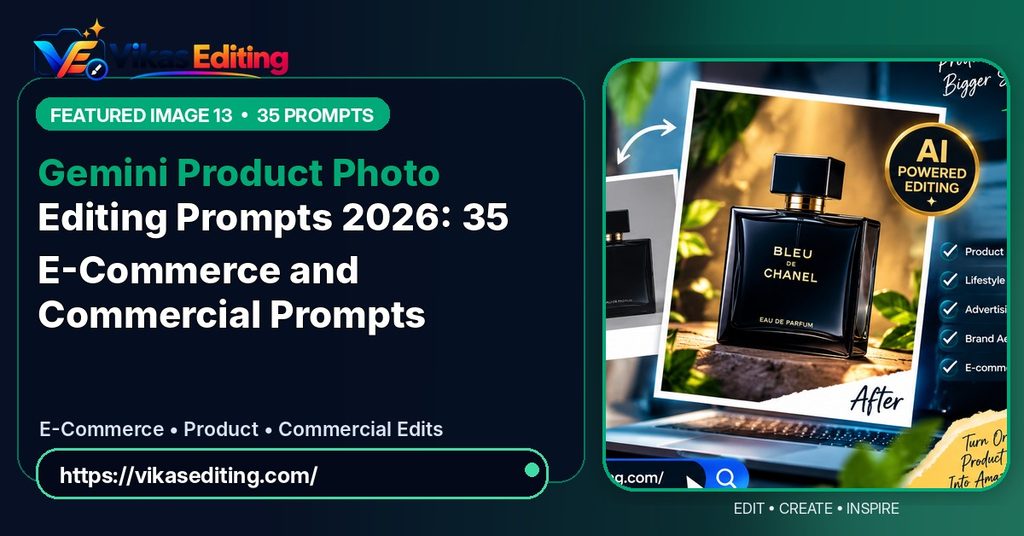
If you searched for Gemini product photo editing prompts, you probably want more than a list of vague one-line commands. You need prompts that explain the edit clearly, protect the important parts of the uploaded image and still leave enough creative direction for the AI to produce an attractive result. This guide is written for e-commerce sellers, marketers and creators who need cleaner commercial images without changing the actual product or its approved packaging.
The best Gemini product photography prompts work because they separate three things: what should change, what should stay the same and how the new pixels should fit the original photograph. That separation matters in Gemini product photo editing because common failures include invented label text, changed product color, fake accessories, distorted packaging and reflections that make the item look like a different product. A good prompt cannot guarantee a perfect result, but it makes the goal much easier for the editor to understand and easier for you to refine.
This article includes 35 copy-paste prompts, a step-by-step usage guide, a reusable prompt formula, customization ideas, troubleshooting advice and FAQs. It also covers related semantic terms naturally, including AI product photography, Gemini product prompts, e-commerce image editing, white background product photo, commercial product image and marketplace listing photography. The purpose is to answer the full search intent instead of repeating the same keyword in every paragraph.
What Are Gemini Product Photo Editing Prompts?
Gemini Product Photo Editing Prompts are written instructions you give an AI image editor together with an uploaded photo. The prompt tells the model what visual change you want while also defining boundaries. Those boundaries can protect a face, product, vehicle, background detail, family member, pose or text depending on the image.
In practical use, the prompt acts like a short creative brief. It can describe the scene, lighting, styling, camera feel, color treatment and final crop. More importantly, it can tell the editor what not to redesign. For this topic, the most important preservation target is product shape, proportions, material, color, branding, label text and approved packaging information.
How to Use These Prompts
1. Upload the Best Original Image You Have
Use the original photo instead of a low-resolution screenshot when possible. A cleaner source gives the model more information about edges, texture, facial features, labels, vehicle lines, clothing seams and existing light. Portraits should show the face clearly. Product and vehicle images should avoid extreme blur. Group images should show each person well enough to remain distinct.
2. Choose the Prompt Closest to Your Goal
Scroll through the 35 prompts and pick the one that already matches most of the look you want. Press the Copy Prompt button, then paste the text into your image editor together with the uploaded photo. Starting from a close match is better than choosing a completely different prompt and changing half of it.
3. Customize Only the Details That Matter
Change the location, outfit, time of day, mood, color palette or aspect ratio if needed. Keep the preservation language when likeness or object accuracy matters. Small controlled changes are easier to evaluate than replacing every creative detail at the same time.
4. Generate, Zoom In and Inspect
Do not judge only from a small preview. Check the details that AI editors often get wrong: eyes, fingers, hair edges, teeth, text, logos, jewelry, fabric seams, reflections, wheels, mirrors, background geometry and contact shadows. The exact checklist depends on the subject, but every public image deserves a full-size review.
5. Correct One Problem at a Time
If the image is almost right, do not regenerate the whole concept with a completely new prompt. Ask for a focused correction. For example, keep the new background but restore the original face, or keep the outfit but fix the hand. Targeted follow-up edits make it easier to preserve the parts that are already working.
A Simple Prompt Formula That Works
A useful structure is Source → Change → Preserve → Match → Avoid → Output. “Source” identifies the uploaded photo. “Change” names the main edit. “Preserve” protects the details that must remain stable. “Match” handles light, perspective and texture. “Avoid” lists a few predictable AI mistakes. “Output” defines the final crop or use.
Reusable Formula
Use the uploaded image as the source. Change [one specific thing]. Preserve [important identity or object details]. Match the original perspective, lighting, shadows and texture. Avoid [common errors]. Output in [aspect ratio] for [intended use].
This formula is useful because it keeps the request focused. A vague instruction such as “make this more cinematic” gives the model a lot of freedom. A structured prompt tells it which parts of the image are creative and which parts are protected.
How to Customize the Prompts Without Ruining the Result
Change the Mood, Not Everything
You can swap words such as warm, editorial, cinematic, minimal, nostalgic, dramatic or clean. Use one dominant mood. Combining retro film, futuristic neon, soft bridal light and hard commercial flash in the same prompt can create conflicting directions.
Change the Lighting Carefully
Useful lighting choices include soft window light, overcast daylight, golden hour, blue hour, diffused studio light and controlled side light. When you change the light, the background, reflections and shadows should also respond to that source. Otherwise the edit can look pasted together.
Choose the Right Aspect Ratio
Use 4:5 for many feed posts, 9:16 for Stories or Reels, 1:1 for square use and 16:9 for a wide banner or thumbnail. If a new ratio requires additional space, ask the editor to extend the environment naturally rather than stretching the subject.
Keep the Preservation Line
The preservation sentence is one of the most important parts of each prompt. It tells the model that style does not have permission to replace the subject. For this article, that means protecting product shape, proportions, material, color, branding, label text and approved packaging information.
Common Mistakes and How to Fix Them
Too Many Major Changes at Once
Changing background, clothing, pose, hairstyle, expression and camera angle in one pass gives the editor too many degrees of freedom. Start with the most important transformation, inspect it and continue with a smaller second edit.
Forgetting the Source Image
Always tell the editor to use the uploaded photo as the source. Without that instruction, the model may interpret your text like a new-image request and produce something that only resembles the original idea.
Conflicting Lighting Instructions
Choose one main lighting environment. A prompt should not ask for golden-hour sun, neon night light and flat white studio light simultaneously unless there is a clear reason for multiple sources.
Overusing Quality Buzzwords
Repeating “8K,” “HDR,” “ultra realistic” and “super sharp” does not fix geometry or likeness. Realism comes from coherent perspective, natural texture, believable light and controlled editing. Too much sharpening can make skin and materials look artificial.
Skipping the Final Detail Check
The most attractive overall image can still contain a bad hand, duplicate reflection or broken word. Review the result before publishing. This is especially important in Gemini product photo editing because typical problems include invented label text, changed product color, fake accessories, distorted packaging and reflections that make the item look like a different product.
Semantic SEO and Related Search Intent
People searching this topic may use different language for the same goal. Related concepts include AI product photography, Gemini product prompts, e-commerce image editing, white background product photo, commercial product image and marketplace listing photography. These terms belong naturally in a useful guide because they describe the workflow, not because they need to be repeated unnaturally.
Search intent also changes from broad to specific. One reader may want a general prompt library, while another wants a single background, hairstyle, outfit, profile picture, family portrait or product image. Covering the full workflow—what the prompt is, how to use it, how to customize it, what can fail and how to fix it—makes the article more useful for both people and answer engines.
35 Gemini Product Photo Editing Prompts to Copy and Paste
Every prompt below is intentionally kept between 100 and 150 words. Copy the closest match, paste it with your uploaded image and change only the details that do not fit your photo.
1. Pure white marketplace hero shot
Use the uploaded photo as the source image. Turn it into a pure white marketplace hero shot. Keep the product as the clear hero, preserve approved branding and label text, and create believable surface contact and material reflections. Preserve product shape, proportions, material, color, branding, label text and approved packaging information. Use soft window light with gentle fill, a 35mm environmental perspective, and balanced commercial color. Match perspective, light direction, shadow softness, reflections, depth of field and edge sharpness so the edited area belongs in the same photograph. Keep natural skin, hair, fabric, metal, glass, paper or product texture where relevant, and avoid face drift, waxy skin, extra fingers, warped geometry and fake text. Output in 1:1 square. Before finalizing, inspect faces, hands, edges, text, shadows and reflections. If a creative change conflicts with identity or object accuracy, prioritize preservation.
2. Light gray catalog background
Use the uploaded photo as the source image. Turn it into a light gray catalog background. Keep the product as the clear hero, preserve approved branding and label text, and create believable surface contact and material reflections. Preserve product shape, proportions, material, color, branding, label text and approved packaging information. Use warm golden-hour light, a 70mm editorial perspective, and rich but realistic color. Match perspective, light direction, shadow softness, reflections, depth of field and edge sharpness so the edited area belongs in the same photograph. Keep natural skin, hair, fabric, metal, glass, paper or product texture where relevant, and avoid duplicate objects, strange reflections, halos, oversharpening and random logos. Output in 9:16 vertical. Before finalizing, inspect faces, hands, edges, text, shadows and reflections. If a creative change conflicts with identity or object accuracy, prioritize preservation.
3. Luxury dark studio product shot
Use the uploaded photo as the source image. Turn it into a luxury dark studio product shot. Keep the product as the clear hero, preserve approved branding and label text, and create believable surface contact and material reflections. Preserve product shape, proportions, material, color, branding, label text and approved packaging information. Use large diffused studio light, a realistic modern phone-camera perspective, and neutral true-to-life color. Match perspective, light direction, shadow softness, reflections, depth of field and edge sharpness so the edited area belongs in the same photograph. Keep natural skin, hair, fabric, metal, glass, paper or product texture where relevant, and avoid broken anatomy, melted edges, unrealistic shadows, plastic skin and unreadable text. Output in 3:4 portrait. Before finalizing, inspect faces, hands, edges, text, shadows and reflections. If a creative change conflicts with identity or object accuracy, prioritize preservation.
4. Soft pastel editorial setup
Use the uploaded photo as the source image. Turn it into a soft pastel editorial setup. Keep the product as the clear hero, preserve approved branding and label text, and create believable surface contact and material reflections. Preserve product shape, proportions, material, color, branding, label text and approved packaging information. Use cool blue-hour ambience with one warm practical source, a 50mm full-frame look, and warm cinematic color. Match perspective, light direction, shadow softness, reflections, depth of field and edge sharpness so the edited area belongs in the same photograph. Keep natural skin, hair, fabric, metal, glass, paper or product texture where relevant, and avoid unnecessary scene changes, distorted hands, false texture, clipped highlights and crushed shadows. Output in 16:9 landscape. Before finalizing, inspect faces, hands, edges, text, shadows and reflections. If a creative change conflicts with identity or object accuracy, prioritize preservation.
5. Botanical natural product scene
Use the uploaded photo as the source image. Turn it into a botanical natural product scene. Keep the product as the clear hero, preserve approved branding and label text, and create believable surface contact and material reflections. Preserve product shape, proportions, material, color, branding, label text and approved packaging information. Use soft overcast daylight, a 50mm eye-level perspective, and clean editorial color. Match perspective, light direction, shadow softness, reflections, depth of field and edge sharpness so the edited area belongs in the same photograph. Keep natural skin, hair, fabric, metal, glass, paper or product texture where relevant, and avoid floating accessories, altered identity, inconsistent light direction, fake bokeh and watermark-like text. Output in the original aspect ratio. Before finalizing, inspect faces, hands, edges, text, shadows and reflections. If a creative change conflicts with identity or object accuracy, prioritize preservation.
6. Marble bathroom beauty product
Use the uploaded photo as the source image. Turn it into a marble bathroom beauty product. Keep the product as the clear hero, preserve approved branding and label text, and create believable surface contact and material reflections. Preserve product shape, proportions, material, color, branding, label text and approved packaging information. Use controlled cinematic side light, a 85mm portrait perspective, and soft film-inspired color. Match perspective, light direction, shadow softness, reflections, depth of field and edge sharpness so the edited area belongs in the same photograph. Keep natural skin, hair, fabric, metal, glass, paper or product texture where relevant, and avoid face drift, waxy skin, extra fingers, warped geometry and fake text. Output in 4:5 vertical. Before finalizing, inspect faces, hands, edges, text, shadows and reflections. If a creative change conflicts with identity or object accuracy, prioritize preservation.
7. Kitchen lifestyle food product
Use the uploaded photo as the source image. Turn it into a kitchen lifestyle food product. Keep the product as the clear hero, preserve approved branding and label text, and create believable surface contact and material reflections. Preserve product shape, proportions, material, color, branding, label text and approved packaging information. Use soft window light with gentle fill, a 35mm environmental perspective, and balanced commercial color. Match perspective, light direction, shadow softness, reflections, depth of field and edge sharpness so the edited area belongs in the same photograph. Keep natural skin, hair, fabric, metal, glass, paper or product texture where relevant, and avoid duplicate objects, strange reflections, halos, oversharpening and random logos. Output in 1:1 square. Before finalizing, inspect faces, hands, edges, text, shadows and reflections. If a creative change conflicts with identity or object accuracy, prioritize preservation.
8. Coffee-shop beverage product
Use the uploaded photo as the source image. Turn it into a coffee-shop beverage product. Keep the product as the clear hero, preserve approved branding and label text, and create believable surface contact and material reflections. Preserve product shape, proportions, material, color, branding, label text and approved packaging information. Use warm golden-hour light, a 70mm editorial perspective, and rich but realistic color. Match perspective, light direction, shadow softness, reflections, depth of field and edge sharpness so the edited area belongs in the same photograph. Keep natural skin, hair, fabric, metal, glass, paper or product texture where relevant, and avoid broken anatomy, melted edges, unrealistic shadows, plastic skin and unreadable text. Output in 9:16 vertical. Before finalizing, inspect faces, hands, edges, text, shadows and reflections. If a creative change conflicts with identity or object accuracy, prioritize preservation.
9. Minimal tech product shot
Use the uploaded photo as the source image. Turn it into a minimal tech product shot. Keep the product as the clear hero, preserve approved branding and label text, and create believable surface contact and material reflections. Preserve product shape, proportions, material, color, branding, label text and approved packaging information. Use large diffused studio light, a realistic modern phone-camera perspective, and neutral true-to-life color. Match perspective, light direction, shadow softness, reflections, depth of field and edge sharpness so the edited area belongs in the same photograph. Keep natural skin, hair, fabric, metal, glass, paper or product texture where relevant, and avoid unnecessary scene changes, distorted hands, false texture, clipped highlights and crushed shadows. Output in 3:4 portrait. Before finalizing, inspect faces, hands, edges, text, shadows and reflections. If a creative change conflicts with identity or object accuracy, prioritize preservation.
10. Reflective metal product shot
Use the uploaded photo as the source image. Turn it into a reflective metal product shot. Keep the product as the clear hero, preserve approved branding and label text, and create believable surface contact and material reflections. Preserve product shape, proportions, material, color, branding, label text and approved packaging information. Use cool blue-hour ambience with one warm practical source, a 50mm full-frame look, and warm cinematic color. Match perspective, light direction, shadow softness, reflections, depth of field and edge sharpness so the edited area belongs in the same photograph. Keep natural skin, hair, fabric, metal, glass, paper or product texture where relevant, and avoid floating accessories, altered identity, inconsistent light direction, fake bokeh and watermark-like text. Output in 16:9 landscape. Before finalizing, inspect faces, hands, edges, text, shadows and reflections. If a creative change conflicts with identity or object accuracy, prioritize preservation.
11. Glass bottle studio shot
Use the uploaded photo as the source image. Turn it into a glass bottle studio shot. Keep the product as the clear hero, preserve approved branding and label text, and create believable surface contact and material reflections. Preserve product shape, proportions, material, color, branding, label text and approved packaging information. Use soft overcast daylight, a 50mm eye-level perspective, and clean editorial color. Match perspective, light direction, shadow softness, reflections, depth of field and edge sharpness so the edited area belongs in the same photograph. Keep natural skin, hair, fabric, metal, glass, paper or product texture where relevant, and avoid face drift, waxy skin, extra fingers, warped geometry and fake text. Output in the original aspect ratio. Before finalizing, inspect faces, hands, edges, text, shadows and reflections. If a creative change conflicts with identity or object accuracy, prioritize preservation.
12. Cosmetics flat-lay
Use the uploaded photo as the source image. Turn it into a cosmetics flat-lay. Keep the product as the clear hero, preserve approved branding and label text, and create believable surface contact and material reflections. Preserve product shape, proportions, material, color, branding, label text and approved packaging information. Use controlled cinematic side light, a 85mm portrait perspective, and soft film-inspired color. Match perspective, light direction, shadow softness, reflections, depth of field and edge sharpness so the edited area belongs in the same photograph. Keep natural skin, hair, fabric, metal, glass, paper or product texture where relevant, and avoid duplicate objects, strange reflections, halos, oversharpening and random logos. Output in 4:5 vertical. Before finalizing, inspect faces, hands, edges, text, shadows and reflections. If a creative change conflicts with identity or object accuracy, prioritize preservation.
13. Jewelry macro product shot
Use the uploaded photo as the source image. Turn it into a jewelry macro product shot. Keep the product as the clear hero, preserve approved branding and label text, and create believable surface contact and material reflections. Preserve product shape, proportions, material, color, branding, label text and approved packaging information. Use soft window light with gentle fill, a 35mm environmental perspective, and balanced commercial color. Match perspective, light direction, shadow softness, reflections, depth of field and edge sharpness so the edited area belongs in the same photograph. Keep natural skin, hair, fabric, metal, glass, paper or product texture where relevant, and avoid broken anatomy, melted edges, unrealistic shadows, plastic skin and unreadable text. Output in 1:1 square. Before finalizing, inspect faces, hands, edges, text, shadows and reflections. If a creative change conflicts with identity or object accuracy, prioritize preservation.
14. Watch luxury product shot
Use the uploaded photo as the source image. Turn it into a watch luxury product shot. Keep the product as the clear hero, preserve approved branding and label text, and create believable surface contact and material reflections. Preserve product shape, proportions, material, color, branding, label text and approved packaging information. Use warm golden-hour light, a 70mm editorial perspective, and rich but realistic color. Match perspective, light direction, shadow softness, reflections, depth of field and edge sharpness so the edited area belongs in the same photograph. Keep natural skin, hair, fabric, metal, glass, paper or product texture where relevant, and avoid unnecessary scene changes, distorted hands, false texture, clipped highlights and crushed shadows. Output in 9:16 vertical. Before finalizing, inspect faces, hands, edges, text, shadows and reflections. If a creative change conflicts with identity or object accuracy, prioritize preservation.
15. Shoe marketplace product shot
Use the uploaded photo as the source image. Turn it into a shoe marketplace product shot. Keep the product as the clear hero, preserve approved branding and label text, and create believable surface contact and material reflections. Preserve product shape, proportions, material, color, branding, label text and approved packaging information. Use large diffused studio light, a realistic modern phone-camera perspective, and neutral true-to-life color. Match perspective, light direction, shadow softness, reflections, depth of field and edge sharpness so the edited area belongs in the same photograph. Keep natural skin, hair, fabric, metal, glass, paper or product texture where relevant, and avoid floating accessories, altered identity, inconsistent light direction, fake bokeh and watermark-like text. Output in 3:4 portrait. Before finalizing, inspect faces, hands, edges, text, shadows and reflections. If a creative change conflicts with identity or object accuracy, prioritize preservation.
16. Fashion accessory product shot
Use the uploaded photo as the source image. Turn it into a fashion accessory product shot. Keep the product as the clear hero, preserve approved branding and label text, and create believable surface contact and material reflections. Preserve product shape, proportions, material, color, branding, label text and approved packaging information. Use cool blue-hour ambience with one warm practical source, a 50mm full-frame look, and warm cinematic color. Match perspective, light direction, shadow softness, reflections, depth of field and edge sharpness so the edited area belongs in the same photograph. Keep natural skin, hair, fabric, metal, glass, paper or product texture where relevant, and avoid face drift, waxy skin, extra fingers, warped geometry and fake text. Output in 16:9 landscape. Before finalizing, inspect faces, hands, edges, text, shadows and reflections. If a creative change conflicts with identity or object accuracy, prioritize preservation.
17. Skincare dropper bottle
Use the uploaded photo as the source image. Turn it into a skincare dropper bottle. Keep the product as the clear hero, preserve approved branding and label text, and create believable surface contact and material reflections. Preserve product shape, proportions, material, color, branding, label text and approved packaging information. Use soft overcast daylight, a 50mm eye-level perspective, and clean editorial color. Match perspective, light direction, shadow softness, reflections, depth of field and edge sharpness so the edited area belongs in the same photograph. Keep natural skin, hair, fabric, metal, glass, paper or product texture where relevant, and avoid duplicate objects, strange reflections, halos, oversharpening and random logos. Output in the original aspect ratio. Before finalizing, inspect faces, hands, edges, text, shadows and reflections. If a creative change conflicts with identity or object accuracy, prioritize preservation.
18. Perfume premium hero shot
Use the uploaded photo as the source image. Turn it into a perfume premium hero shot. Keep the product as the clear hero, preserve approved branding and label text, and create believable surface contact and material reflections. Preserve product shape, proportions, material, color, branding, label text and approved packaging information. Use controlled cinematic side light, a 85mm portrait perspective, and soft film-inspired color. Match perspective, light direction, shadow softness, reflections, depth of field and edge sharpness so the edited area belongs in the same photograph. Keep natural skin, hair, fabric, metal, glass, paper or product texture where relevant, and avoid broken anatomy, melted edges, unrealistic shadows, plastic skin and unreadable text. Output in 4:5 vertical. Before finalizing, inspect faces, hands, edges, text, shadows and reflections. If a creative change conflicts with identity or object accuracy, prioritize preservation.
19. Snack package clean listing
Use the uploaded photo as the source image. Turn it into a snack package clean listing. Keep the product as the clear hero, preserve approved branding and label text, and create believable surface contact and material reflections. Preserve product shape, proportions, material, color, branding, label text and approved packaging information. Use soft window light with gentle fill, a 35mm environmental perspective, and balanced commercial color. Match perspective, light direction, shadow softness, reflections, depth of field and edge sharpness so the edited area belongs in the same photograph. Keep natural skin, hair, fabric, metal, glass, paper or product texture where relevant, and avoid unnecessary scene changes, distorted hands, false texture, clipped highlights and crushed shadows. Output in 1:1 square. Before finalizing, inspect faces, hands, edges, text, shadows and reflections. If a creative change conflicts with identity or object accuracy, prioritize preservation.
20. Supplement bottle clean listing
Use the uploaded photo as the source image. Turn it into a supplement bottle clean listing. Keep the product as the clear hero, preserve approved branding and label text, and create believable surface contact and material reflections. Preserve product shape, proportions, material, color, branding, label text and approved packaging information. Use warm golden-hour light, a 70mm editorial perspective, and rich but realistic color. Match perspective, light direction, shadow softness, reflections, depth of field and edge sharpness so the edited area belongs in the same photograph. Keep natural skin, hair, fabric, metal, glass, paper or product texture where relevant, and avoid floating accessories, altered identity, inconsistent light direction, fake bokeh and watermark-like text. Output in 9:16 vertical. Before finalizing, inspect faces, hands, edges, text, shadows and reflections. If a creative change conflicts with identity or object accuracy, prioritize preservation.
21. Home decor lifestyle shot
Use the uploaded photo as the source image. Turn it into a home decor lifestyle shot. Keep the product as the clear hero, preserve approved branding and label text, and create believable surface contact and material reflections. Preserve product shape, proportions, material, color, branding, label text and approved packaging information. Use large diffused studio light, a realistic modern phone-camera perspective, and neutral true-to-life color. Match perspective, light direction, shadow softness, reflections, depth of field and edge sharpness so the edited area belongs in the same photograph. Keep natural skin, hair, fabric, metal, glass, paper or product texture where relevant, and avoid face drift, waxy skin, extra fingers, warped geometry and fake text. Output in 3:4 portrait. Before finalizing, inspect faces, hands, edges, text, shadows and reflections. If a creative change conflicts with identity or object accuracy, prioritize preservation.
22. Furniture room-context shot
Use the uploaded photo as the source image. Turn it into a furniture room-context shot. Keep the product as the clear hero, preserve approved branding and label text, and create believable surface contact and material reflections. Preserve product shape, proportions, material, color, branding, label text and approved packaging information. Use cool blue-hour ambience with one warm practical source, a 50mm full-frame look, and warm cinematic color. Match perspective, light direction, shadow softness, reflections, depth of field and edge sharpness so the edited area belongs in the same photograph. Keep natural skin, hair, fabric, metal, glass, paper or product texture where relevant, and avoid duplicate objects, strange reflections, halos, oversharpening and random logos. Output in 16:9 landscape. Before finalizing, inspect faces, hands, edges, text, shadows and reflections. If a creative change conflicts with identity or object accuracy, prioritize preservation.
23. Phone accessory product shot
Use the uploaded photo as the source image. Turn it into a phone accessory product shot. Keep the product as the clear hero, preserve approved branding and label text, and create believable surface contact and material reflections. Preserve product shape, proportions, material, color, branding, label text and approved packaging information. Use soft overcast daylight, a 50mm eye-level perspective, and clean editorial color. Match perspective, light direction, shadow softness, reflections, depth of field and edge sharpness so the edited area belongs in the same photograph. Keep natural skin, hair, fabric, metal, glass, paper or product texture where relevant, and avoid broken anatomy, melted edges, unrealistic shadows, plastic skin and unreadable text. Output in the original aspect ratio. Before finalizing, inspect faces, hands, edges, text, shadows and reflections. If a creative change conflicts with identity or object accuracy, prioritize preservation.
24. Laptop accessory studio shot
Use the uploaded photo as the source image. Turn it into a laptop accessory studio shot. Keep the product as the clear hero, preserve approved branding and label text, and create believable surface contact and material reflections. Preserve product shape, proportions, material, color, branding, label text and approved packaging information. Use controlled cinematic side light, a 85mm portrait perspective, and soft film-inspired color. Match perspective, light direction, shadow softness, reflections, depth of field and edge sharpness so the edited area belongs in the same photograph. Keep natural skin, hair, fabric, metal, glass, paper or product texture where relevant, and avoid unnecessary scene changes, distorted hands, false texture, clipped highlights and crushed shadows. Output in 4:5 vertical. Before finalizing, inspect faces, hands, edges, text, shadows and reflections. If a creative change conflicts with identity or object accuracy, prioritize preservation.
25. Car-care product shot
Use the uploaded photo as the source image. Turn it into a car-care product shot. Keep the product as the clear hero, preserve approved branding and label text, and create believable surface contact and material reflections. Preserve product shape, proportions, material, color, branding, label text and approved packaging information. Use soft window light with gentle fill, a 35mm environmental perspective, and balanced commercial color. Match perspective, light direction, shadow softness, reflections, depth of field and edge sharpness so the edited area belongs in the same photograph. Keep natural skin, hair, fabric, metal, glass, paper or product texture where relevant, and avoid floating accessories, altered identity, inconsistent light direction, fake bokeh and watermark-like text. Output in 1:1 square. Before finalizing, inspect faces, hands, edges, text, shadows and reflections. If a creative change conflicts with identity or object accuracy, prioritize preservation.
26. Pet product listing image
Use the uploaded photo as the source image. Turn it into a pet product listing image. Keep the product as the clear hero, preserve approved branding and label text, and create believable surface contact and material reflections. Preserve product shape, proportions, material, color, branding, label text and approved packaging information. Use warm golden-hour light, a 70mm editorial perspective, and rich but realistic color. Match perspective, light direction, shadow softness, reflections, depth of field and edge sharpness so the edited area belongs in the same photograph. Keep natural skin, hair, fabric, metal, glass, paper or product texture where relevant, and avoid face drift, waxy skin, extra fingers, warped geometry and fake text. Output in 9:16 vertical. Before finalizing, inspect faces, hands, edges, text, shadows and reflections. If a creative change conflicts with identity or object accuracy, prioritize preservation.
27. Handmade craft product shot
Use the uploaded photo as the source image. Turn it into a handmade craft product shot. Keep the product as the clear hero, preserve approved branding and label text, and create believable surface contact and material reflections. Preserve product shape, proportions, material, color, branding, label text and approved packaging information. Use large diffused studio light, a realistic modern phone-camera perspective, and neutral true-to-life color. Match perspective, light direction, shadow softness, reflections, depth of field and edge sharpness so the edited area belongs in the same photograph. Keep natural skin, hair, fabric, metal, glass, paper or product texture where relevant, and avoid duplicate objects, strange reflections, halos, oversharpening and random logos. Output in 3:4 portrait. Before finalizing, inspect faces, hands, edges, text, shadows and reflections. If a creative change conflicts with identity or object accuracy, prioritize preservation.
28. Gift box festive product shot
Use the uploaded photo as the source image. Turn it into a gift box festive product shot. Keep the product as the clear hero, preserve approved branding and label text, and create believable surface contact and material reflections. Preserve product shape, proportions, material, color, branding, label text and approved packaging information. Use cool blue-hour ambience with one warm practical source, a 50mm full-frame look, and warm cinematic color. Match perspective, light direction, shadow softness, reflections, depth of field and edge sharpness so the edited area belongs in the same photograph. Keep natural skin, hair, fabric, metal, glass, paper or product texture where relevant, and avoid broken anatomy, melted edges, unrealistic shadows, plastic skin and unreadable text. Output in 16:9 landscape. Before finalizing, inspect faces, hands, edges, text, shadows and reflections. If a creative change conflicts with identity or object accuracy, prioritize preservation.
29. Transparent-background cutout
Use the uploaded photo as the source image. Turn it into a transparent-background cutout. Keep the product as the clear hero, preserve approved branding and label text, and create believable surface contact and material reflections. Preserve product shape, proportions, material, color, branding, label text and approved packaging information. Use soft overcast daylight, a 50mm eye-level perspective, and clean editorial color. Match perspective, light direction, shadow softness, reflections, depth of field and edge sharpness so the edited area belongs in the same photograph. Keep natural skin, hair, fabric, metal, glass, paper or product texture where relevant, and avoid unnecessary scene changes, distorted hands, false texture, clipped highlights and crushed shadows. Output in the original aspect ratio. Before finalizing, inspect faces, hands, edges, text, shadows and reflections. If a creative change conflicts with identity or object accuracy, prioritize preservation.
30. Square social ad product shot
Use the uploaded photo as the source image. Turn it into a square social ad product shot. Keep the product as the clear hero, preserve approved branding and label text, and create believable surface contact and material reflections. Preserve product shape, proportions, material, color, branding, label text and approved packaging information. Use controlled cinematic side light, a 85mm portrait perspective, and soft film-inspired color. Match perspective, light direction, shadow softness, reflections, depth of field and edge sharpness so the edited area belongs in the same photograph. Keep natural skin, hair, fabric, metal, glass, paper or product texture where relevant, and avoid floating accessories, altered identity, inconsistent light direction, fake bokeh and watermark-like text. Output in 4:5 vertical. Before finalizing, inspect faces, hands, edges, text, shadows and reflections. If a creative change conflicts with identity or object accuracy, prioritize preservation.
31. Clean Marketplace Listing
Use the uploaded photo as the source image. Turn it into a clean marketplace listing. Keep the product as the clear hero, preserve approved branding and label text, and create believable surface contact and material reflections. Preserve product shape, proportions, material, color, branding, label text and approved packaging information. Use soft window light with gentle fill, a 35mm environmental perspective, and balanced commercial color. Match perspective, light direction, shadow softness, reflections, depth of field and edge sharpness so the edited area belongs in the same photograph. Keep natural skin, hair, fabric, metal, glass, paper or product texture where relevant, and avoid face drift, waxy skin, extra fingers, warped geometry and fake text. Output in 1:1 square. Before finalizing, inspect faces, hands, edges, text, shadows and reflections. If a creative change conflicts with identity or object accuracy, prioritize preservation.
32. Warm Wood Table Product Scene
Use the uploaded photo as the source image. Turn it into a warm wood table product scene. Keep the product as the clear hero, preserve approved branding and label text, and create believable surface contact and material reflections. Preserve product shape, proportions, material, color, branding, label text and approved packaging information. Use warm golden-hour light, a 70mm editorial perspective, and rich but realistic color. Match perspective, light direction, shadow softness, reflections, depth of field and edge sharpness so the edited area belongs in the same photograph. Keep natural skin, hair, fabric, metal, glass, paper or product texture where relevant, and avoid duplicate objects, strange reflections, halos, oversharpening and random logos. Output in 9:16 vertical. Before finalizing, inspect faces, hands, edges, text, shadows and reflections. If a creative change conflicts with identity or object accuracy, prioritize preservation.
33. Minimal Concrete Product Scene
Use the uploaded photo as the source image. Turn it into a minimal concrete product scene. Keep the product as the clear hero, preserve approved branding and label text, and create believable surface contact and material reflections. Preserve product shape, proportions, material, color, branding, label text and approved packaging information. Use large diffused studio light, a realistic modern phone-camera perspective, and neutral true-to-life color. Match perspective, light direction, shadow softness, reflections, depth of field and edge sharpness so the edited area belongs in the same photograph. Keep natural skin, hair, fabric, metal, glass, paper or product texture where relevant, and avoid broken anatomy, melted edges, unrealistic shadows, plastic skin and unreadable text. Output in 3:4 portrait. Before finalizing, inspect faces, hands, edges, text, shadows and reflections. If a creative change conflicts with identity or object accuracy, prioritize preservation.
34. Bathroom Shelf Product Scene
Use the uploaded photo as the source image. Turn it into a bathroom shelf product scene. Keep the product as the clear hero, preserve approved branding and label text, and create believable surface contact and material reflections. Preserve product shape, proportions, material, color, branding, label text and approved packaging information. Use cool blue-hour ambience with one warm practical source, a 50mm full-frame look, and warm cinematic color. Match perspective, light direction, shadow softness, reflections, depth of field and edge sharpness so the edited area belongs in the same photograph. Keep natural skin, hair, fabric, metal, glass, paper or product texture where relevant, and avoid unnecessary scene changes, distorted hands, false texture, clipped highlights and crushed shadows. Output in 16:9 landscape. Before finalizing, inspect faces, hands, edges, text, shadows and reflections. If a creative change conflicts with identity or object accuracy, prioritize preservation.
35. Top-Down E-Commerce Flat Lay
Use the uploaded photo as the source image. Turn it into a top-down e-commerce flat lay. Keep the product as the clear hero, preserve approved branding and label text, and create believable surface contact and material reflections. Preserve product shape, proportions, material, color, branding, label text and approved packaging information. Use soft overcast daylight, a 50mm eye-level perspective, and clean editorial color. Match perspective, light direction, shadow softness, reflections, depth of field and edge sharpness so the edited area belongs in the same photograph. Keep natural skin, hair, fabric, metal, glass, paper or product texture where relevant, and avoid floating accessories, altered identity, inconsistent light direction, fake bokeh and watermark-like text. Output in the original aspect ratio. Before finalizing, inspect faces, hands, edges, text, shadows and reflections. If a creative change conflicts with identity or object accuracy, prioritize preservation.
How to Get More Consistent Results
Consistency comes from controlling the size of each edit. Keep the first request focused, preserve the parts that are already correct and use follow-up instructions for small fixes. If the editor changes too much, reduce the creative request instead of adding more style words. If it changes too little, add one concrete visual detail such as a location, lighting direction or wardrobe description.
It also helps to compare two versions with only one variable changed. For example, keep the same prompt and switch golden hour to blue hour. That makes it easier to understand how the model interprets your wording. Over time, you can build a smaller set of phrases that work reliably with your own photos and preferred editing style.
For model-specific guidance, see the official prompting guidance. Use official documentation for current capabilities and this guide for practical copy-paste editing structures.
Frequently Asked Questions
What makes a good Gemini product photo editing prompts?
A good prompt names one clear edit, protects the important parts of the source image, uses coherent lighting and perspective, avoids a few predictable errors and states the desired output. Clarity matters more than repeating quality words.
How long should each image editing prompt be?
A simple edit can work with one or two sentences. For a controlled transformation, roughly 100 to 150 words gives enough room for the creative direction, preservation rules, realism checks and output format without turning the prompt into a long repetitive paragraph.
Can I shorten the prompts?
Yes. Remove creative details that do not apply to your image. Keep the preservation sentence if likeness, product accuracy, vehicle geometry, text or group identity matters.
Why does the AI sometimes change the face?
Image editors may regenerate parts of the source while performing a large transformation. Put face preservation before style instructions, reduce the size of the requested change and make corrections in separate steps if likeness begins to drift.
Can I use the same prompt in Gemini and ChatGPT?
The core structure usually transfers well, although different models may interpret style and preservation language differently. Start with the same prompt and refine it based on the actual output from the tool you are using.
Which image quality gives the best result?
Use the clearest source you have. Good detail, normal exposure and visible subject edges help the editor understand what needs to stay stable. Heavy filters, extreme blur and compressed screenshots reduce useful source information.
Why does my edit look artificial?
Typical causes are conflicting lighting, excessive skin smoothing, unrealistic depth of field, missing contact shadows, bad hands, warped text or a background that does not match the original perspective. Simplify the prompt and correct one issue at a time.
Are these prompts suitable for social media?
Yes. Change the final aspect ratio and crop for your platform. Keep the main subject away from edges that may be covered by interface elements, and check the image at the size viewers will actually see it.
Final Thoughts
Gemini Product Photo Editing Prompts 2026 – 30+ E-commerce Copy Paste Prompts gives you a complete starting point: 35 copy-ready prompts, a clear usage workflow, a reusable formula, semantic context, troubleshooting advice and FAQs. Start with a clean source image, choose one prompt that matches your goal and keep the preservation sentence when identity or object accuracy matters. If the first output is close, make one correction instead of rebuilding the entire image.
Usage note: Edit images you own or have permission to use. These prompts can tell an editor not to add watermarks, but they do not instruct it to remove ownership or copyright watermarks from third-party images.